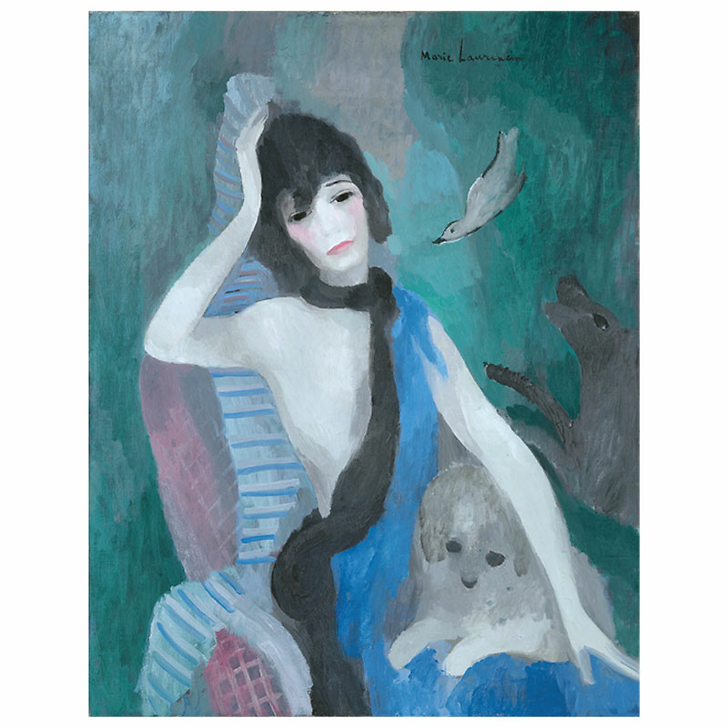
Poster Marie Laurencin - Portrait of Mademoiselle Chanel, 1923
IA200544
Marie Laurencin (1883 - 1956)
Portrait of Mademoiselle Chanel in 1923 - Oil on canvas H. 92 ; L. 73 cm with frame H. 109,3 ; L. 90 cm
Foujita Foundation / ADAGP, Paris 2021 © RMN-Grand Palais (Musée de l'Orangerie) / DR
The artist depicts Coco Chanel from the front, seated and languid, her head bent...
Read more
Marie Laurencin (1883 - 1956)
Portrait of Mademoiselle Chanel in 1923 - Oil on canvas H. 92 ; L. 73 cm with frame H. 109,3 ; L. 90 cm
Foujita Foundation / ADAGP, Paris 2021 © RMN-Grand Palais (Musée de l'Orangerie) / DR
The artist depicts Coco Chanel from the front, seated and languid, her head bent over leaning on her right arm. From then on, Marie Laurencin constantly mixed animals with humans and here depicts a white poodle sitting on the model's lap. On the right of the painting, another dog leaps towards a turtledove which seems to descend from the sky towards Coco Chanel, like the dove of the Holy Spirit, perhaps a symbol of freedom? The soft harmony of colours, green, blue and pink, is reinforced by the long black line of the scarf falling from the model's neck.
Chanel did not appreciate this portrait and refused to pay Marie Laurencin for it. The latter, furious, did not want to give her a second portrait and kept this one.
Source : Paul Rosenberg (?) ; Paul Guillaume (?) ; Domenica Walter
Close
Login to see prices
Sold by GrandPalaisRmn