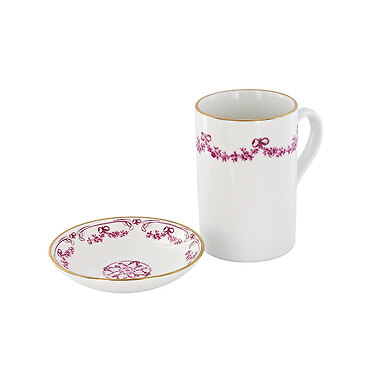
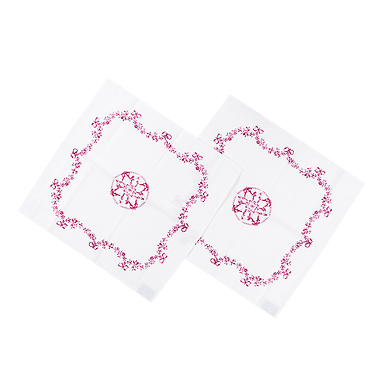
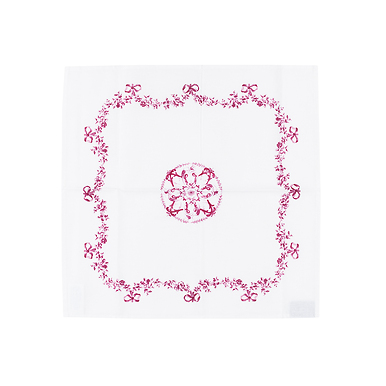
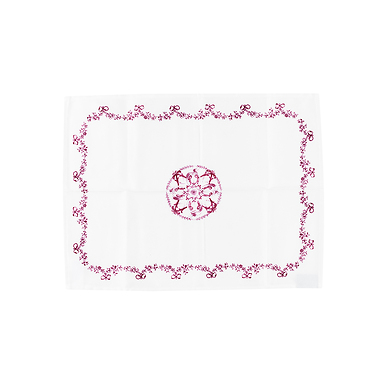

New products

View new arrivals

Around current
exhibitions

Renoir Drawings

17 March 2026 5 July 2026

This is the first exhibition to be dedicated to Renoir's drawings, and highlights the importance of graphic techniques in his artistic development. It also reveals the close relationship between his paintings and his drawings, in particular from the 1880s onwards when he began to move away from Impressionism.

Curatorship

Paul Perrin, Chief Curator and Director of Conservation and Collections, Musée d'Orsay;

Colin B. Bailey, Katharine J. Rayner Director, Morgan Library & Museum, New York;

Anne Distel, Honorary General Curator of Heritage, Musée d'Orsay;

Sarah Lees, Research Associate to the Director, Morgan Library and Museum, New York;

Cloé Viala, Head of Documentary Studies, Musée d'Orsay.

Renoir and Love. A Joyful modernity (1865-1885)

17 March 2026 19 July 2026

A major figure in impressionism, Pierre Auguste Renoir, like Manet, Degas, Monet and Caillebotte, is regarded as one of the 19th century's great painters of modern life. Between the mid-1860s and the 1880s, he developed a light, fluid manner of painting, bursting with light and color, along with new subjects focusing on relationships between men and women.

This exhibition, co-organized with the National Gallery in London and the Museum of Fine Arts in Boston, reexamines Renoir's fundamental contributions to impressionism and 19th-century art history through the complex, universal notion of love, the central driving force of his work. It provides a new perspective on paintings that are so well-known that it has become difficult to perceive how radical they are. For the first time since 1985 (the year the last Renoir retrospective was held in Paris, at the Grand Palais), some of the artist's and impressionism's greatest masterpieces will be brought together in France.

Curatorship

Paul Perrin, Chief Curator and Director of Conservation and Collections, Musée d'Orsay;

Christopher Riopelle, Neil Westreich Curator of Post 1800 Paintings, National Gallery, London;

Chiara di Stefano, Associate curator of Post 1800 Paintings at the National Gallery, London;

Katie Hanson, William and Ann Elfers Curator of Paintings, Art of Europe, Museum of Fine Arts, Boston;

  • With the participation of

    Lucie Lachenal-Tabellet, Head of Documentary Studies, Musée d'Orsay.

Unicorns !

10 March 2026 12 July 2026

Do you think you know everything about the unicorn? A fantastic animal omnipresent in popular culture, it nonetheless remains full of mysteries. From March 10 to July 12, 2026, the Musée de Cluny will unravel all its facets with the exhibition "Unicorns!".

The exhibition "Unicorns!" is organised by the Musée de Cluny and the GrandPalaisRmn, with the Museum Barberini in Potsdam. It benefits from loans from prestigious international museum institutions such as the Rijksmuseum in Amsterdam, the Museo Nacional del Prado in Madrid, the Victoria and Albert Museum in London, the Kunsthistorisches Museum in Vienna, and the Musée du Louvre.

Curators

Béatrice de Chancel-Bardelot General Curator, Musée de Cluny (Paris, France)
Michael Philipp Chief Curator, Museum Barberini (Potsdam, Germany)

Leonora Carrington

18 February 2026 19 July 2026

Artist, feminist and avant-garde environmentalist, woman, mother, migrant, marked by mental illness and spiritual quest, Leonora Carrington left behind a legacy as extraordinary as it is radical.

Born in 1917 in Lancashire, England, Leonora Carrington forged her identity through travel, both internal and external. From Florence to Paris, from the South of France to Spain, and finally to Mexico, where she became a cult figure, her extraordinary path nourished a body of work at the crossroads of surrealism, mythology, and esotericism.

This exhibition, bringing together 126 works, is the first major exhibition in France devoted exclusively to Carrington's work. It presents Carrington as a "Vitruvian Woman": a total artist representing a model of harmony and innovation. Her creations merge human and animal, masculine and feminine, giving form to a world where metamorphoses and symbols respond to each other.

Through a chronological and thematic approach, as well as a unique presentation of her diverse visionary creations, the exhibition explores the artist's main themes and interests: her discovery of classical Italian art in Florence during her adolescence, her fascination with the Renaissance, her Celtic and post-Victorian origins, and her involvement in surrealism during her stay in France.

The exhibition thus highlights the exceptional legacy of this perpetual traveler, always in search of self-knowledge.

The Lady and the Unicorn

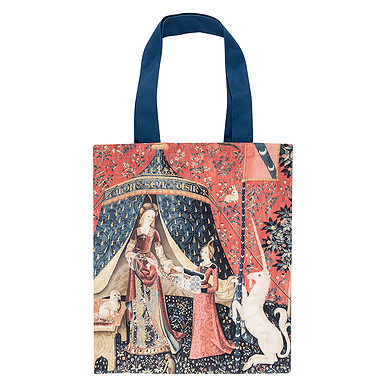
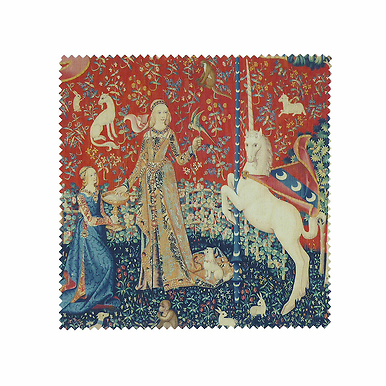
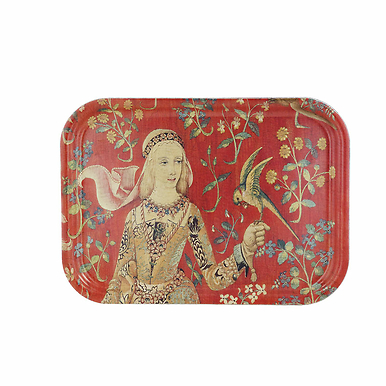
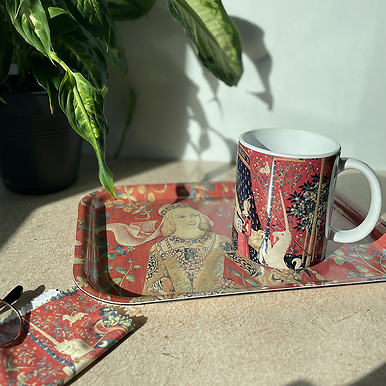
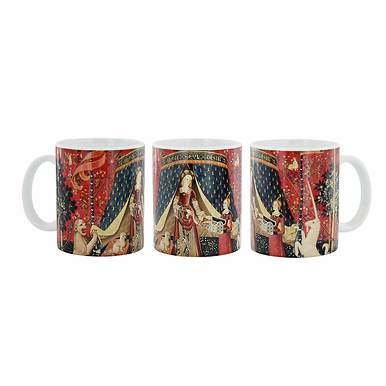
Touch, Taste, Smell, Hearing and Sight... and a sixth piece symbolizing the sixth sense, with a blue tent and the inscription To my only desir. The tapestries that make up the Lady and the Unicorn hanging are among the most famous works in the Musée de Cluny collection.

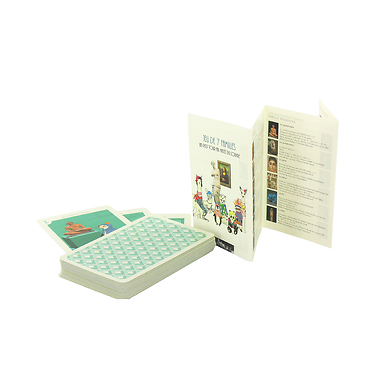
Fun & Learn

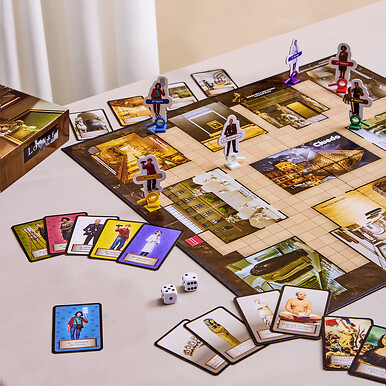
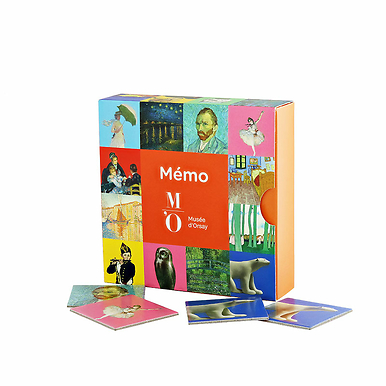
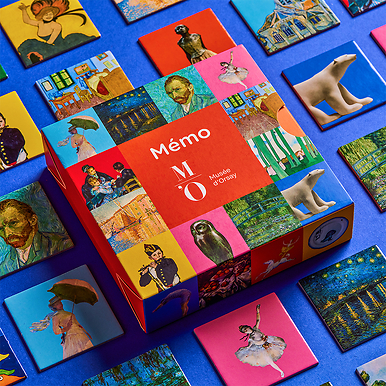
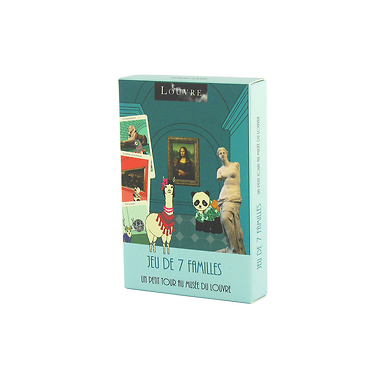
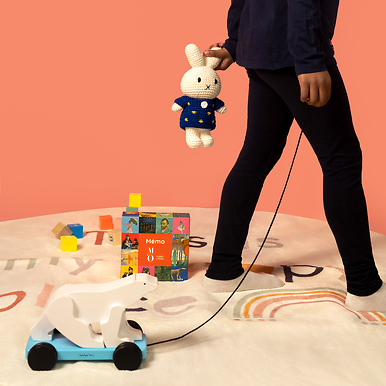
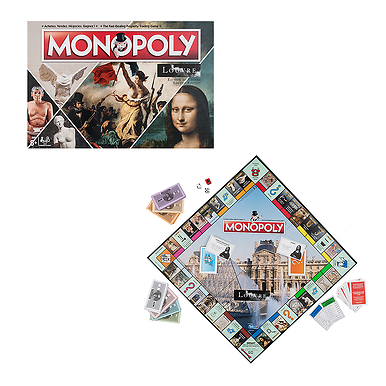
Discover the world's greatest museums and their collections, inviting young and grownups to enjoy.

Contemporary Engravings

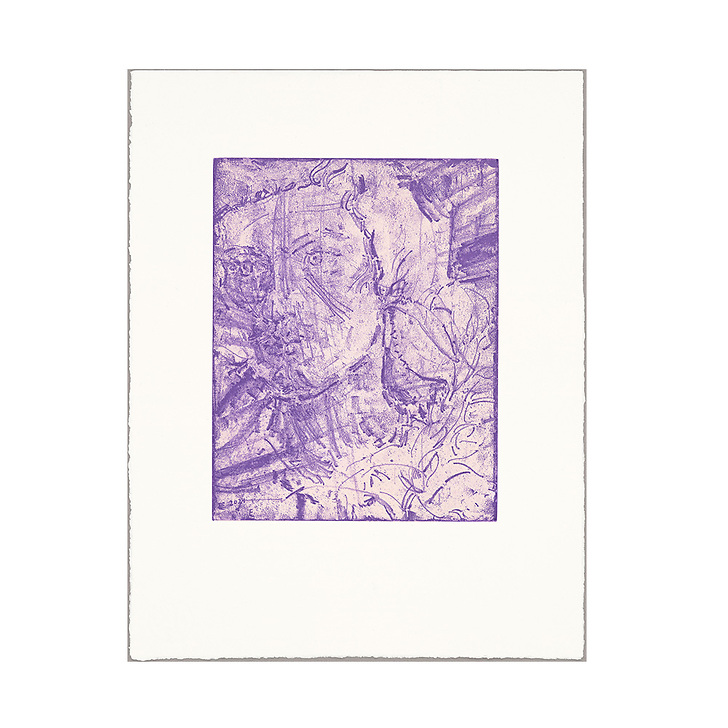
Engraving The Friend (from a work by Titien) - Elizabeth Peyton

KM011493
Elizabeth Peyton's revelation as an artist came when she discovered the works in the Louvre through books. One of her first fascinations was Titian's Man with a Glove (1520-1522), one of the most famous paintings by the Venetian master.

The spontaneous process of using soft varnish, known as "à la manière de crayon", enabled him to draw freely through paper directly onto the varnish of the metal plate. This direct, unrepentant technique offers an element of randomness to the creative process, which Elizabeth Peyton welcomed as a creative opportunity for this intimate portrait.

A subtle, bold palette of colours reveals the strength of the features, helps to capture the expression, and adds depth to the composition. The result is a figurative print of great graphic sensitivity, with a masterful technique of expression and quick, sharp strokes.

L'Ami (after Titian) by Elizabeth Peyton is a magnetic, timeless portrait, tinged with a modern sensibility, reflecting a precise, tender and intimate moment that gives L'Homme au gant a contemporary face and recalls the ancestral skills of the craftsmen of the Atelier de chalcographie du GrandPalaisRmn.

Essentials

See essentials

Our sales team is available to assist you

Please contact us for any questions about product availability, customization, specific production, or anything else:

Contact form pro.boutiquesdemusees@grandpalaisrmn.fr