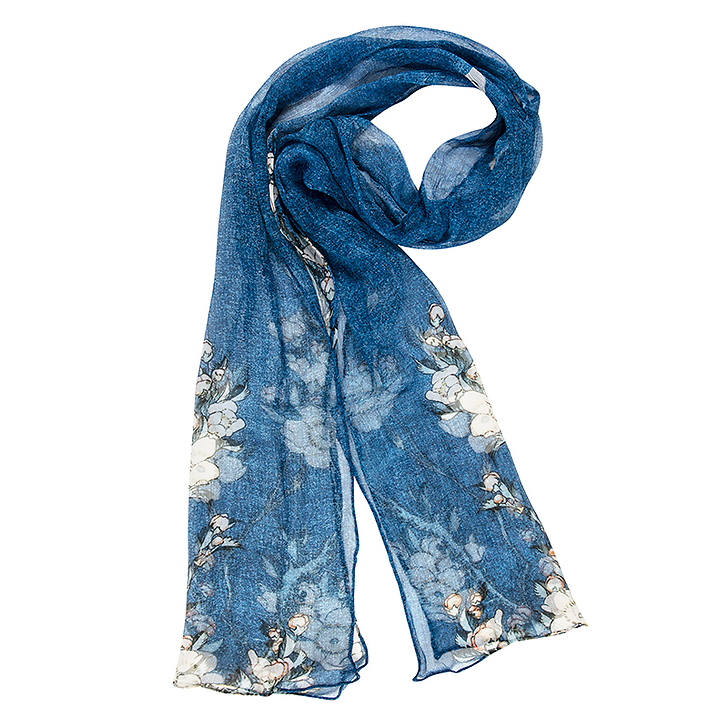
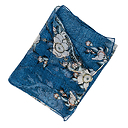
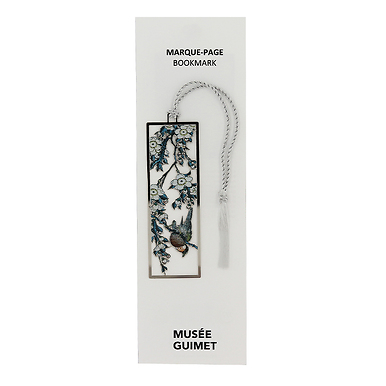
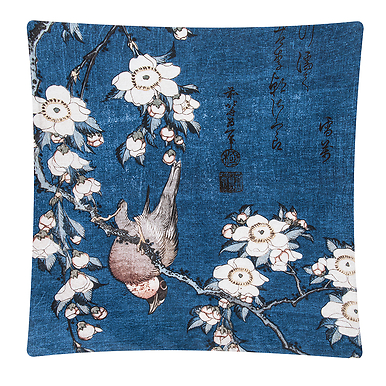
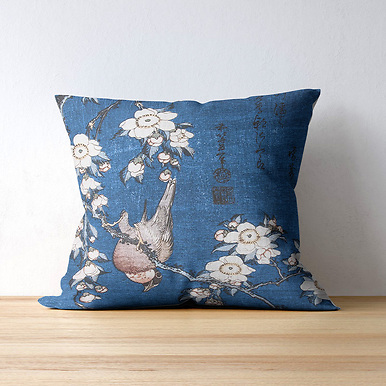
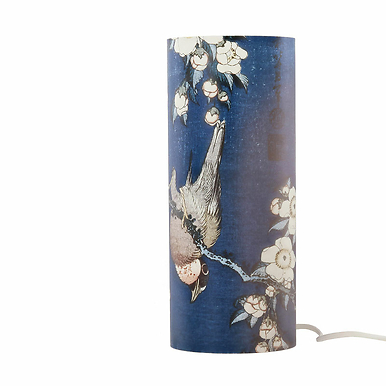
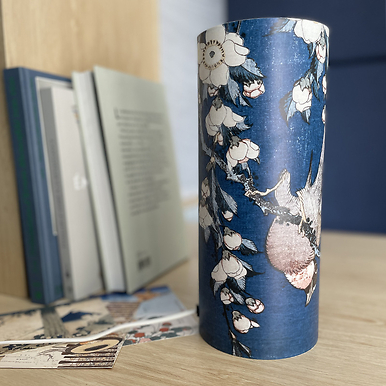
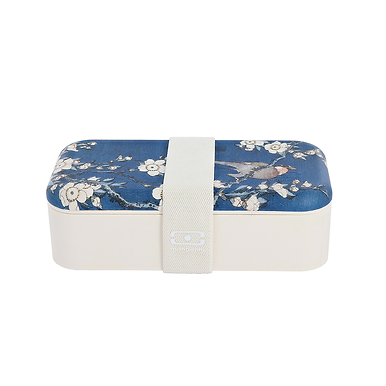
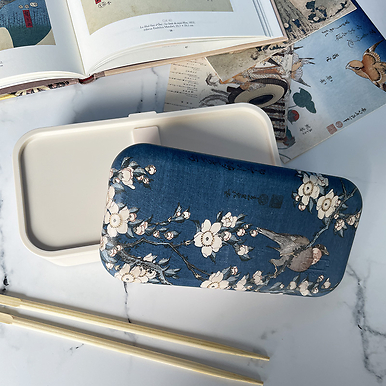
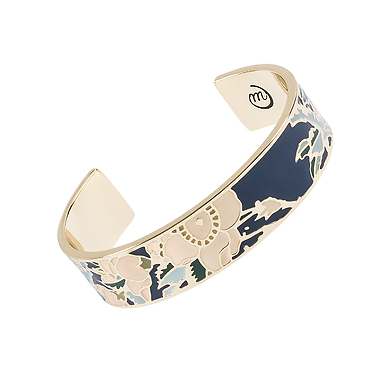
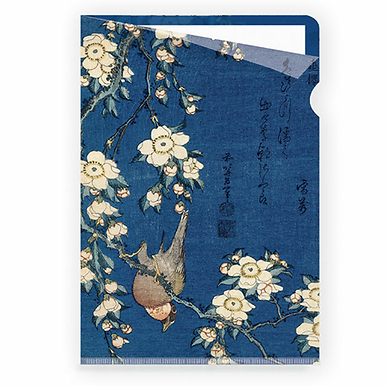
This stole is inspired by a detail of a work from the series of Small Flowers by the Japanese artist Katsushika Hokusai (1760-1849), "Bullfinch and weeping cherry-tree", 1834.
The series of Large Flowers and Small Flowers testify to his qualities of observation of nature, of an almost scientific precision in the line.
Finish: Hand-rolled hem.
Hand-rolled is a refined hemming technique based on the skills of hand sewing.
The craft of roulotting, once widespread in France, is now disappearing. Only a few well-known brands still practice it.
Bullfinch and Weeping Cherry Blossoms: An Iconic Japanese Print
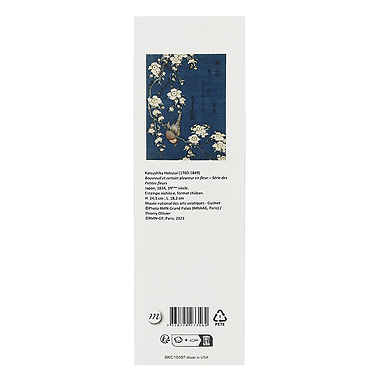
Created in 1834, the original print "Bullfinch and Weeping Cherry Blossoms" is a polychrome print (nishiki-e) on laid paper. Housed at the Guimet Museum in Paris, this 24.40 × 18.20 cm work is part of the "Petites fleurs" series, in which the artist employs almost scientific precision to depict nature. The nishiki-e printing technique allowed for the use of multiple engraved woodblocks to create images with subtle and detailed colors.
Further reading on the Artwork
What is the symbolism of the cherry tree in Hokusai's work?
In Hokusai's work, the cherry tree symbolizes the impermanence and fleeting beauty of life, a central concept in ukiyo-e that evokes a poetic sensibility toward the passage of time. This depiction of the cherry blossom tree continues to inspire many creations today, particularly Japanese posters depicting cherry blossoms in the tradition of Hokusai.
What is the true Japanese cherry tree?
The true Japanese cherry tree, a symbol of spring blossoms and renewal, corresponds to the botanical species Prunus serrulata, an ornamental tree native to East Asia belonging to the Rosaceae family.
What is the history of the Japanese cherry tree?
Native to the Himalayas and introduced to Japan during the Nara period (710-794), the Japanese cherry tree, or Sakura, evolved from a sacred tree reserved for the imperial elite and samurai into a national symbol of fleeting beauty celebrated by all during the traditional Hanami festival.