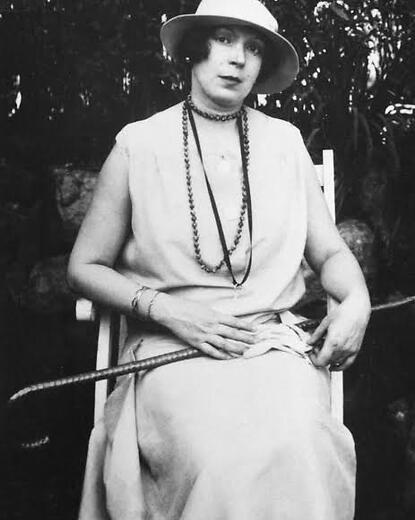
Pioneers. Artists in the Paris of the Roaring Twenties - Découvertes Gallimard Carnet d'expo
GK197912
Written in French.
Long marginalised and discriminated against, women artists of the Roaring Twenties nevertheless played a key role in the development of the great artistic movements of modernity. Their plastic, literary and conceptual explorations are synonymous with a certain audacity and real courage...
Read more
Written in French.
Long marginalised and discriminated against, women artists of the Roaring Twenties nevertheless played a key role in the development of the great artistic movements of modernity. Their plastic, literary and conceptual explorations are synonymous with a certain audacity and real courage in the face of the established conventions confining women to certain professions and roles.
For the artists of the 1920s, this risk-taking was a way of questioning women's identity, both individual and collective, and of redefining their position in society.
This exhibition booklet invites us to re-inscribe these artists in this history of art in transformation: from Fauvism to abstraction, via Cubism, Dadaism and Surrealism in particular, but also in the world of architecture, dance, design, literature and fashion.
Written in French.
64 pages / 36 illustrations
Coédition Gallimard / Rmn -Grand Palais
Collection Découvertes Gallimard Carnet d'expo
Close
Login to see prices
Sold by GrandPalaisRmn